
Glass and ceramics in implantable device packaging
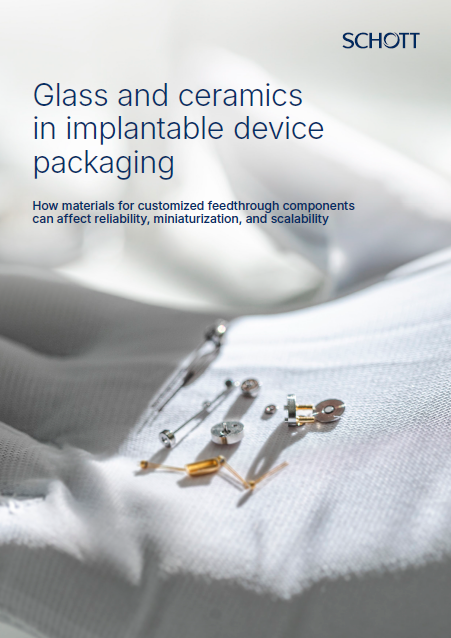
Implantable medical devices are becoming smaller, smarter, and expected to last longer than ever before. As device complexity grows, selecting the right feedthrough and packaging materials can be critical for long-term reliability, performance, and patient safety.
Hermetic glass-to-metal sealing and ceramic-to-metal sealing technologies each offer unique advantages for medical feedthrough components, but the choice ultimately depends on factors such as miniaturization, conductor density, mechanical stability, and scalability requirements.
In this guide, you'll discover:
- How glass-to-metal and ceramic-to-metal sealing approaches differ
- Which material characteristics can influence feedthrough density, interface design, and long-term device performance
- Practical considerations for evaluating material options in implantable device development
Learn how material selection for customized feedthrough components can drive influence the next generation of reliable, high-performance implantable medical devices.
Download Now
Disclaimer: This document is provided for informational purposes only. The statements and comparisons presented reflect general engineering considerations and may not apply to all applications. Actual performance, reliability, and suitability depend on device-specific design, operating conditions, manufacturing processes, and validation. SCHOTT supplies hermetic packaging components, including customized feedthrough solutions, and does not manufacture implantable medical devices.